Palm Beach vs West Palm Condos: How the Markets Compare
June 11, 2026
June 11, 2026
Choosing between Palm Beach and West Palm Beach for a luxury condo is not just about price. It is about how you want to live day to day, what kind of views matter most to you, and how much you value beach access, walkability, building age, and amenity style. If you are weighing both markets, this guide will help you compare them clearly so you can focus on the option that fits your lifestyle and priorities best. Let’s dive in.
For this comparison, Palm Beach refers to the island market in 33480, and West Palm Beach refers to the downtown and waterfront condo market in 33401. Both are luxury condo markets within Palm Beach County, but they serve very different buyers.
Palm Beach is the more expensive, more cash-heavy, and more ocean-centered market. West Palm Beach offers a broader range of price points, a more urban feel, and a strong mix of newer waterfront towers and walkable downtown convenience.
In Q4 2025, Palm Beach recorded 63 condo sales with a median sale price of $1.15 million and an average sale price of $2.03 million. In the same period, downtown West Palm Beach recorded 97 condo sales with a median sale price of $430,000 and an average sale price of $826,271.
That gap also shows up in active listings. Palm Beach had 265 condos for sale at a median list price of $1.25 million, while West Palm Beach had 293 condos for sale at a median list price of $430,000.
Both areas sit above the broader Palm Beach County condo market. In March 2026, countywide condo inventory was 7,098 units, months of supply was 8.5, and the countywide median sale price was $330,000.
That context matters because it shows that both Palm Beach and downtown West Palm Beach are premium submarkets. Even so, Palm Beach clearly commands a much steeper premium for its island address, oceanfront setting, and limited supply.
Palm Beach also appears more cash-driven. In Q4 2025, 56 of 63 sales in 33480 were cash transactions, compared with 66 of 97 sales in 33401.
Palm Beach is the classic choice if you picture a quieter, more private, beach-centered luxury lifestyle. The town has more than 12 miles of beachfront and two public beaches, including the municipal beach near Worth Avenue.
Worth Avenue stretches from the Atlantic Ocean to the Intracoastal Waterway in just three blocks. That gives the island a very specific rhythm, with beach access, shopping, and a polished residential feel all close together.
Palm Beach tends to feel more resort-residential than urban. If you want a refined setting that revolves around the ocean and established luxury addresses, this market often aligns well.
Downtown West Palm Beach offers a more urban luxury experience. It is built around the waterfront, skyline views, restaurants, downtown activity, and easier access to transit and daily conveniences.
The Downtown Development Authority describes downtown as designed to be explored on foot. Many destinations are within a 10- to 20-minute walk of Clematis Street, the waterfront, CityPlace, the Brightline station, and the Palm Tran Intermodal Transit Center.
If you want your condo life to include walkable dining, entertainment, and transportation options, West Palm Beach has the stronger everyday convenience story.
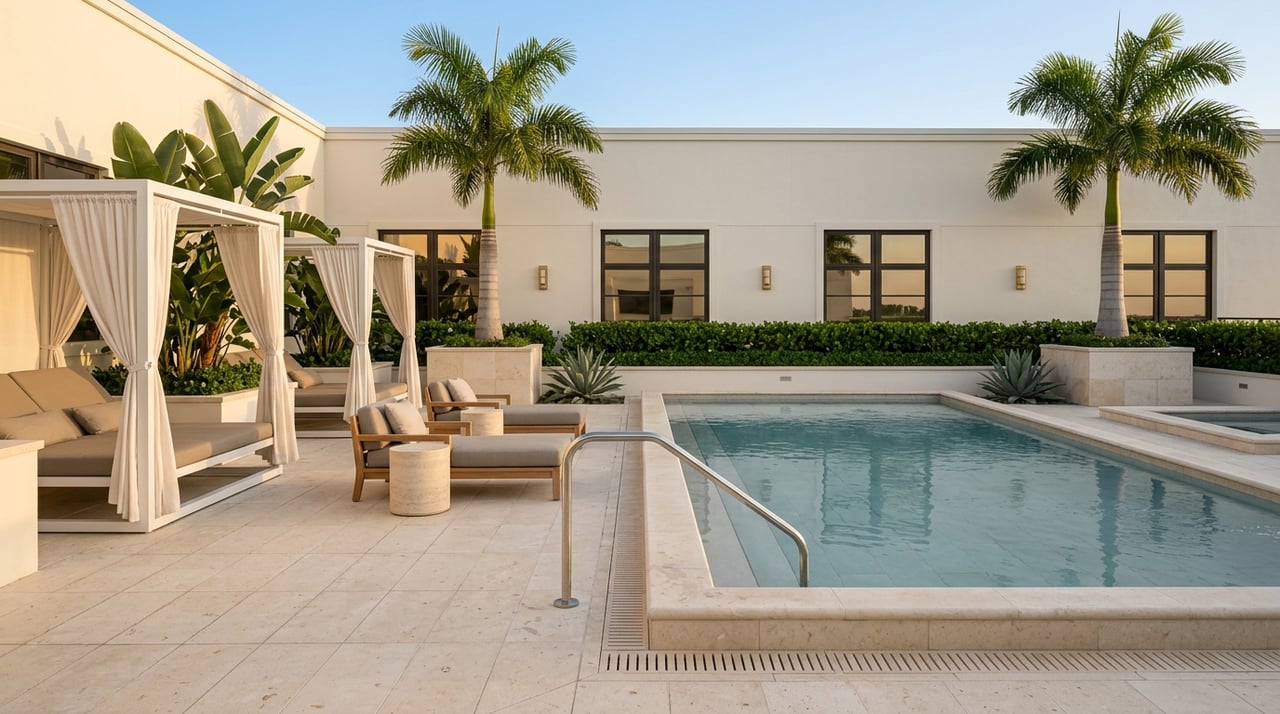
Palm Beach is generally the better fit for direct oceanfront living and beach-centered views. Condo buildings on the island often emphasize private beach access, oceanfront pool decks, doorman service, fitness centers, saunas, and water views.
Much of the Palm Beach condo inventory is established rather than newly built. The town’s planning priorities include preserving its beauty, quality of life, and small-town character, which helps explain why the island feels less like a new-tower district and more like a mature luxury market.
If you are drawn to classic oceanfront buildings and a more established ownership environment, Palm Beach stands out.
West Palm Beach is more likely to deliver Intracoastal, island, skyline, and downtown views. Its current luxury inventory and pipeline include newer waterfront towers such as Olara, Shorecrest, Alba, and The Berkeley.
These projects highlight features like private marinas or docks, wellness spaces, club rooms, concierge services, rooftop or waterfront pools, and panoramic water views. That makes West Palm Beach especially appealing if you want a newer full-service building with a more contemporary amenity package.
In short, Palm Beach leans classic and oceanfront. West Palm Beach leans newer, amenity-rich, and urban waterfront.
If living car-light or car-free matters to you, downtown West Palm Beach has the advantage. The Brightline station at 260 Quadrille Plaza Drive is within walking distance of downtown destinations, and the waterfront also offers free public docks for non-commercial boats.
Palm Beach is walkable too, but in a different way. It is more destination-based, with beach access near Worth Avenue and a setting that feels intimate and residential rather than grid-based and urban.
For some buyers, that quieter rhythm is exactly the point. For others, the ability to step outside and reach restaurants, transit, and waterfront activity within minutes makes West Palm Beach more practical.
Florida condo rules are important in both markets. Buildings that are three habitable stories or more must complete milestone inspections at 30 years of age and every 10 years after that, and residential condominium associations must also complete a structural integrity reserve study at least every 10 years.
When those requirements apply, buyers must receive the milestone summary and reserve study information before signing. This makes document review a key part of the buying process in both Palm Beach and West Palm Beach.
For many buyers, the due diligence focus differs by market:
Palm Beach owners should also understand the town’s active coastal-management environment. The town has ongoing coastal protection projects, and temporary beach-access closures can happen when erosion conditions require them.
Palm Beach is generally the more exclusive-feeling market based on pricing, sales mix, and setting. The island address, stronger cash presence, and close tie to oceanfront living all contribute to that identity.
West Palm Beach is still firmly part of the luxury conversation, especially along the waterfront. But its broader price ladder and more varied building mix make it feel more flexible and accessible across a wider range of luxury buyers.
That difference is useful, not better or worse. It simply means each market serves a different version of luxury living.
If your top priority is prestige, beach access, and a more private ocean-centered setting, Palm Beach is often the stronger fit. If you want newer inventory, urban energy, and a broader luxury condo landscape, West Palm Beach may make more sense.
For investment-minded buyers, the clearest distinction is this: Palm Beach is the tighter, prestige-first condo play, while West Palm Beach is the more varied urban-luxury option. That is not a prediction of future performance, but it is a practical way to understand how the two markets differ today.
The best choice usually comes down to your preferred daily lifestyle, not just the purchase price. When you look closely at views, building age, walkability, and ownership details, the right answer often becomes much clearer.
If you are comparing Palm Beach and West Palm Beach and want a thoughtful, data-informed view of which luxury condo market fits your goals, Julie Nelson can help you evaluate the options with clarity and discretion.
Stay up to date on the latest real estate trends.
Julie offers a tailored real estate experience built on market expertise, discretion, and a genuine commitment to her clients’ success.